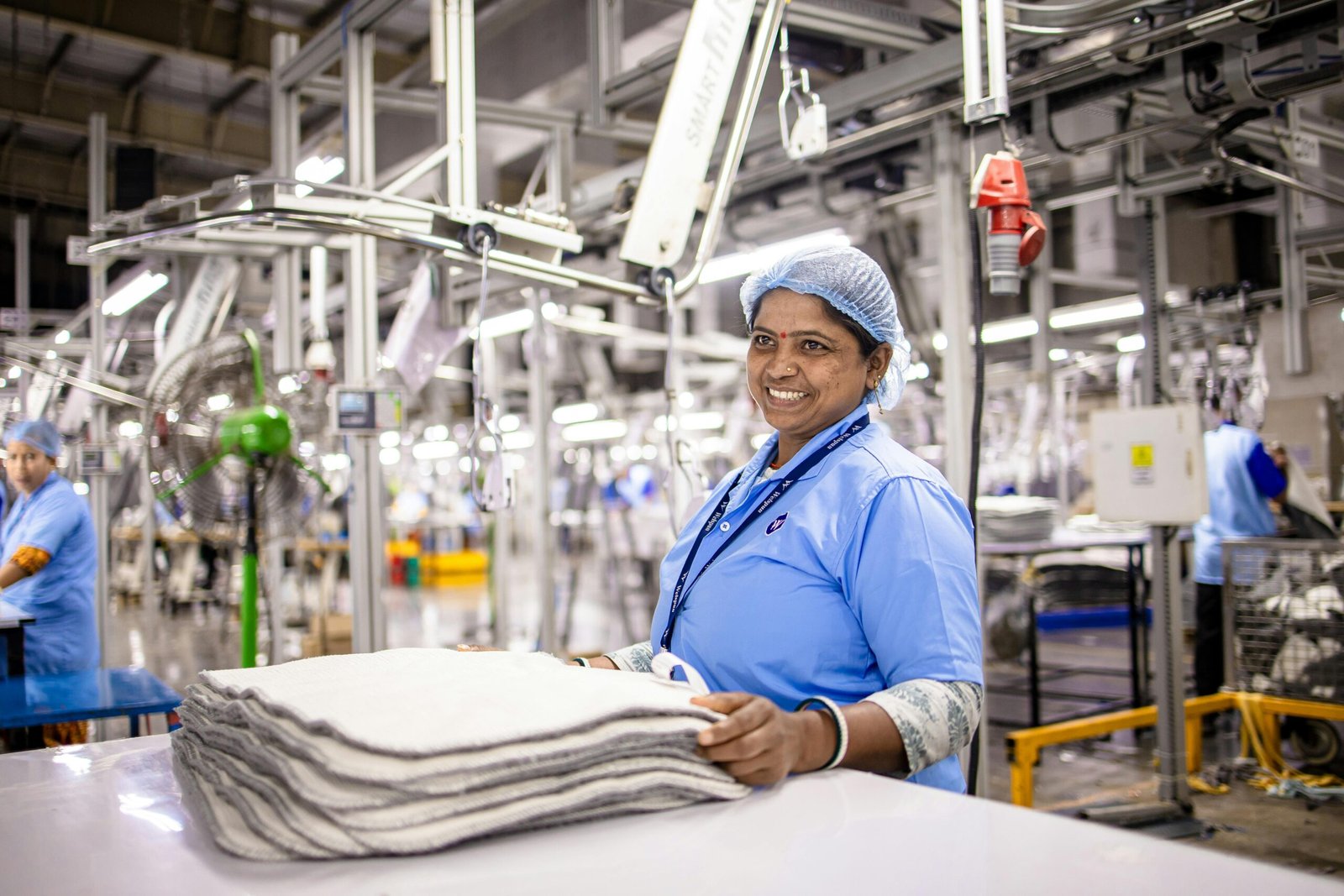
What if your next career move took you to the country famous for Ferrari factories, Barilla pasta plants, and some of the most advanced manufacturing facilities in Europe? Italy is actively recruiting foreign workers to fill thousands of factory and production jobs — and with the right information, you could be one of them. Whether you’re in Asia, Africa, or the Middle East, factory jobs in Italy with visa sponsorship are more accessible in 2026 than ever before.
In this guide, we break down everything you need to know: real salaries, Italy’s historic new work visa program, what employers look for, and exactly how to apply — step by step.
Why Italy Is Hiring Foreign Factory Workers Right Now
Italy’s manufacturing sector is the backbone of its economy — it’s the second-largest industrial producer in the European Union. Yet the country is facing a well-documented labour shortage. An aging domestic workforce and a declining birth rate have left factories, production lines, and logistics hubs with far more open positions than local workers can fill.
The Italian government’s response has been decisive. Italy has approved 500,000 work visas for foreign professionals between 2026 and 2028, making it one of the most extensive legal labour immigration plans in the country’s history. Glassdoor The expanded quotas mainly target sectors experiencing severe labour shortages Glassdoor — and manufacturing sits right at the top of that list.
For skilled and unskilled workers alike, this is a rare window of opportunity.
Types of Factory Jobs Available in Italy
The Italian manufacturing sector is diverse. Here’s a snapshot of roles that are actively being filled by foreign workers with visa sponsorship:
- Production Line Operator – assembling, inspecting, or packaging goods on automated or manual production lines
- Machine Operator – running and monitoring industrial machinery in food, textile, or automotive plants
- Forklift & Warehouse Operator – moving raw materials and finished goods within factory premises
- Quality Control Inspector – checking products for defects and ensuring they meet production standards
- Food Processing Worker – sorting, packing, and processing goods in food and beverage manufacturing plants
- Maintenance Technician – servicing and repairing industrial machinery (higher-skill, higher-pay tier)
- Factory Supervisor / Team Lead – overseeing production teams, scheduling shifts, and reporting to management
Industries actively hiring include food and beverage processing, automotive components, textiles, ceramics, packaging, and logistics.
Factory Worker Salary in Italy 2026
Let’s talk numbers. This is what you can realistically expect to earn:
The average gross monthly salary in Italy ranges from €2,000 to €2,800, depending on the role, skill level, and region. Seasonal Work Visa For factory and manufacturing roles specifically, here’s a practical breakdown:
| Role | Monthly Gross Salary (approx.) |
|---|---|
| General Factory / Production Worker | €1,300 – €1,700 |
| Machine Operator | €1,600 – €2,000 |
| Forklift Operator | €1,700 – €2,100 |
| Quality Control Inspector | €1,800 – €2,200 |
| Maintenance Technician | €2,200 – €3,000 |
| Factory Supervisor | €2,400 – €3,200 |
Many employers also offer competitive salaries with paid overtime, bonuses, and free accommodation Seasonal Visa Jobs — especially for internationally recruited workers. When you add housing, health coverage, and shift premiums into the equation, the total compensation package can be significantly more valuable than the base figure suggests.
Northern Italy — especially Lombardy, Emilia-Romagna, Veneto, and Piedmont — offers the highest job availability and salaries. Seasonal Work Visa These industrial heartlands are home to Italy’s most productive manufacturing clusters.
Italy’s Decreto Flussi: The Visa Pathway for Factory Workers
The single most important thing you need to understand about working legally in Italy as a non-EU citizen is the Decreto Flussi — Italy’s official immigration flow decree.
The newly approved Decreto Flussi for 2026–2028 lays out a three-year plan authorizing nearly 500,000 work visas for non-EU citizens. Agfoods About 76,000+ visas in 2026 alone are for non-seasonal jobs across a wide range of sectors — essentially all major industries are eligible. Agfoods
Who Can Apply?
Non-EU citizens such as those from Pakistan, India, Bangladesh, and others are eligible. Inedjobs In fact, 25,000 work visas in 2026 are reserved for citizens of 38 specified non-EU priority countries, including Albania, Algeria, Bangladesh, Egypt, India, Morocco, Nigeria, Pakistan, Senegal, Sri Lanka, Tunisia, Ukraine, and others. Agfoods
The Type D Work Visa (Visto Lavoro Subordinato)
This is the visa most factory workers will apply for. Here’s how the process flows:
Step 1: The employer confirms the role qualifies under Italy’s annual immigration quotas and that they meet the requirements to sponsor foreign workers. Seasonal Work Visa
Step 2: The employer submits a work authorization request — known as a “Nulla Osta” — through the Sportello Unico per l’Immigrazione (Single Immigration Desk), including proof of the job offer, the employee’s qualifications, and compliance with labour regulations. Abroad
Step 3: Once the Nulla Osta is approved, it is transmitted electronically to the Italian consulate in the worker’s country of residence. The employee then books an appointment at the Italian consulate to apply for the national Type D work visa, submitting the Nulla Osta, passport, photos, completed visa forms, and supporting documents. Seasonal Work Visa
After the employment offer is accepted and the visa is granted, the worker travels to Italy and must request a Residence Permit (Permesso di Soggiorno) within 8 days of arrival. Inedjobs
What Factory Employers in Italy Are Looking For
You might be wondering: “Do I really qualify?” The honest answer for most factory roles is — yes, more likely than you think.
Basic requirements typically include:
- Age 18 or above
- No serious criminal record (a police clearance certificate from your home country is usually required)
- Valid passport
- Physical fitness for manual labour
- Basic conversational ability in English or Italian (varies by employer)
- Willingness to work shifts, including evenings or weekends
Preferred but not always required:
- 1–2 years of factory, warehouse, or production experience
- Forklift certification or machine operation training
- Any vocational qualification in a technical or industrial trade
Many employers actively support foreign workers by offering training programs and internal promotions to help workers advance in their careers, along with a safe work environment built on respect, diversity, and equal opportunities. Seasonal Visa Jobs
A Real-World Story: From Lahore to a Production Floor in Milan
Consider the story of Kamran, a 31-year-old from Lahore with two years of experience working in a textile factory. He applied during one of Italy’s official Decreto Flussi “click days” — the window when employer quota applications open — through a food processing company in Lombardy. His employer filed the Nulla Osta, the visa was approved within three months, and Kamran arrived in Milan with a full-time contract, subsidized accommodation, and a monthly salary of €1,650. Within 18 months, he’d been promoted to line supervisor.
His advice to others? “Don’t wait for perfect conditions. Apply during click days, have your documents ready, and trust the process.” It’s a sentiment shared by thousands of workers who’ve made the same journey before him.
How to Find and Apply for Factory Jobs in Italy with Visa Sponsorship
Here’s your practical action plan:
- Search on official and trusted job platforms — use Indeed Italy (it.indeed.com), InfoJobs Italy, LinkedIn, and EURES (the EU’s official cross-border job portal at eures.europa.eu). Filter searches by “visa sponsorship” or “nulla osta.”
- Check Italian employer websites directly — major food, automotive, and logistics companies in northern Italy regularly post openings for international workers.
- Prepare your documents in advance — passport, updated CV in Italian or English, police clearance certificate, any work experience letters or vocational certificates.
- Apply during “Click Day” windows — Italy’s Decreto Flussi applications open on specific dates. Starting in 2026, the nationwide quota will be divided by province to better match local labour demand Indeed, so following news about provincial openings can give you an edge.
- Work with a licensed immigration lawyer if needed — especially for navigating the Nulla Osta paperwork from your home country.
- Register for your Permesso di Soggiorno immediately upon arrival — this is a legal requirement within 8 days of entering Italy.
⚠️ Important warning: Never pay a recruiter or agent to “guarantee” you a job in Italy. Legitimate employers bear the cost of the Nulla Osta process. If someone is asking you for money upfront for a job placement, it’s a red flag.
Benefits That Come with Factory Jobs in Italy
Beyond the salary, full-time factory employment in Italy typically includes:
- Paid annual leave — at least 4 weeks per year under Italian law
- Sick leave and social security contributions paid by the employer
- Health coverage through Italy’s national healthcare system (SSN) once registered as a resident
- 13th-month salary — a legally mandated bonus payment at year-end (standard across Italian industry)
- Overtime pay — regulated by sector-specific collective bargaining agreements (CCNL)
- Accommodation support — many employers offer free or subsidized housing for recruited foreign workers
After legally living and working in Italy for five consecutive years, workers can apply for a long-term residence permit Seasonal Work Visa — and this is often the first step on the road to permanent residency in Europe.
FAQs: Factory Jobs in Italy with Visa Sponsorship
Q: Can unskilled workers get factory jobs in Italy with visa sponsorship? A: Yes. Many entry-level production and packaging roles require no formal qualifications. Employers provide on-the-job training, and physical fitness and reliability are often the most important criteria.
Q: How long does the Italian work visa process take? A: Work permits typically take around 2–3 months Seasonal Work Visa from the time the employer submits the Nulla Osta. You should factor in additional time for the visa interview at your local Italian consulate.
Q: Is Italian language required to work in a factory in Italy? A: For most production floor roles, basic Italian or English is sufficient. Many large factories have multilingual supervisors and on-site translators for international workers.
Q: Can factory work in Italy lead to permanent residency? A: Yes. After five consecutive years of legal residence and employment in Italy, you become eligible to apply for a long-term EU residence permit — a major stepping stone toward permanent settlement.
Q: What is the Decreto Flussi “Click Day” and how do I take advantage of it? A: Click Day is the specific date when Italian employers can submit quota applications online through the government portal. As a worker, you need to have a confirmed job offer before Click Day — so the key is to secure an employer willing to sponsor you ahead of this window.
Conclusion: Italy Is Open — and So Is Your Opportunity
We know that packing up your life to work in a new country isn’t simple. There are forms to fill, processes to navigate, and moments of doubt along the way. But here’s what we want you to hold onto: Italy isn’t just offering jobs — it’s offering a foothold in Europe, a legal path forward, and a quality of life that’s hard to match anywhere in the world.
The Decreto Flussi programme is real. The quotas are substantial. The factories need you. And thousands of workers from South Asia, Africa, and the Middle East are already building stable, dignified lives on Italian production floors — earning European wages, contributing to great companies, and sending their kids to school in cities like Milan, Turin, and Bologna.
You don’t need perfect Italian or a fancy degree to start. You need a valid passport, a clean record, and the drive to take the next step.
So do your research, prepare your documents, find a legitimate employer, and apply when the window opens. Italy is waiting — and this could be the most important move you ever make.